
How to Prevent Ticks: A Homeowner’s Guide to Lyme Disease Prevention
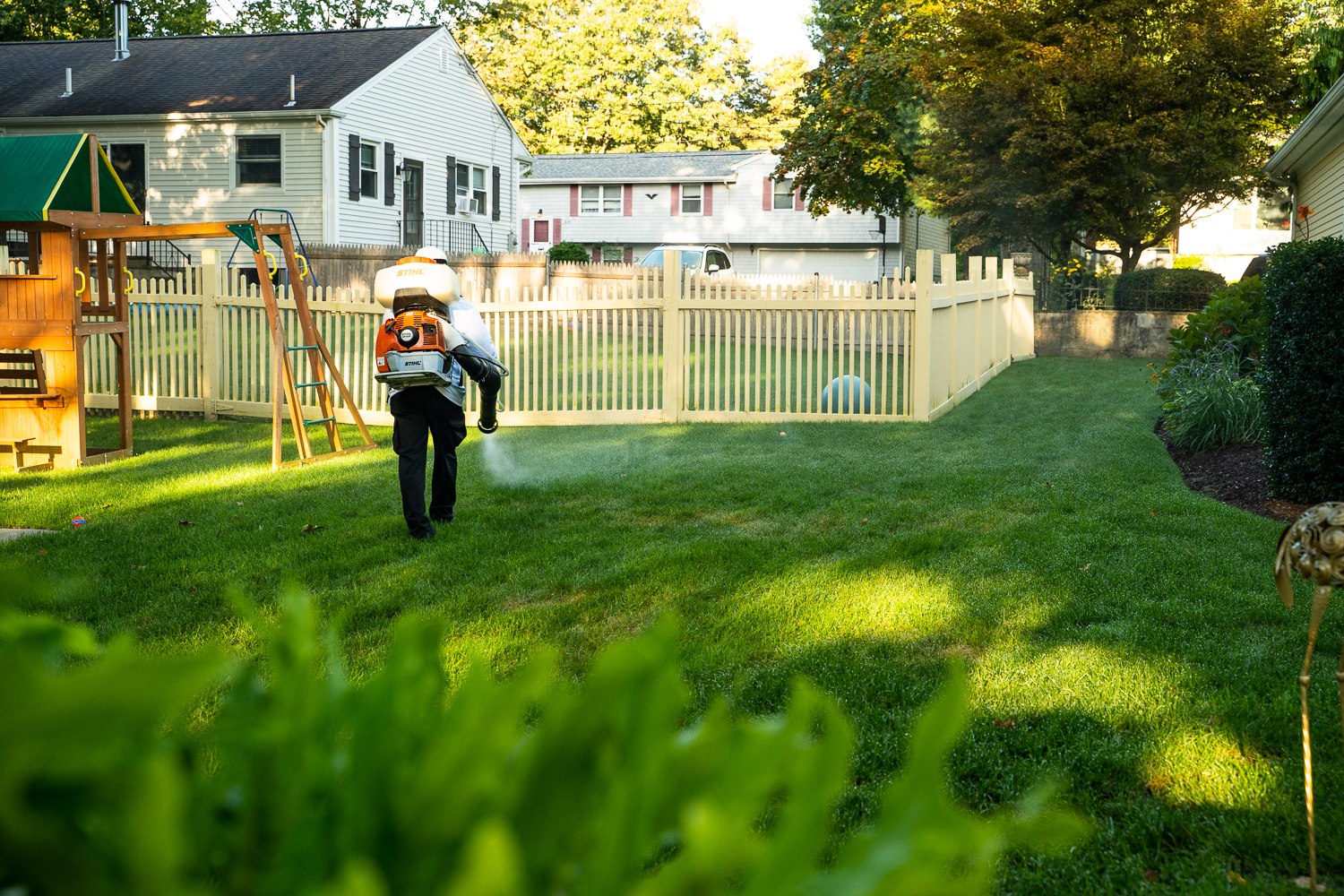
Ticks are a year-round concern for homeowners across New England and the Raleigh Triangle — and the diseases they carry are serious enough to warrant a clear, practical plan. This guide walks you through how to prevent ticks in your yard, how to protect yourself and your family outdoors, what to do after a tick bite, and when to contact a healthcare provider. Whether you live in Barnstable, Framingham, Providence, or Cary, the steps you take in your own yard make a measurable difference.
What Is Lyme Disease and How Is It Transmitted?
Lyme disease is the most commonly reported vector-borne disease in the United States, caused by the bacterium Borrelia burgdorferi and transmitted to humans through the bite of an infected blacklegged tick (Ixodes scapularis in the East, Ixodes pacificus in the West). According to the Centers for Disease Control and Prevention (CDC), the tick generally needs to be attached for 36 to 48 hours before the bacterium can be transmitted — meaning prompt removal of an attached tick significantly reduces transmission risk. Early detection and removal are therefore the most actionable defenses available to any homeowner.
Source: Connecticut Agricultural Experiment Station — Tick Management Handbook
Blacklegged ticks are most dangerous in their nymph stage: they are roughly the size of a poppy seed, making them extremely difficult to spot during a routine check. Nymphs feed from late spring through midsummer, overlapping with peak outdoor activity for most families. Adult ticks are easier to see but remain active into late fall and through the winter on any day above freezing. Understanding this life cycle is the foundation of any effective prevention strategy.
Source: URI TickEncounter Resource Center — Blacklegged Tick
Do All Ticks Carry Lyme Disease?
No — and this distinction matters for homeowners deciding where to focus their concern. In the northeastern and mid-Atlantic United States, the blacklegged tick (also called the deer tick) is the primary vector for Lyme disease. Two other common species do not transmit Lyme disease at all:
- American dog tick (Dermacentor variabilis): This species is widespread across the eastern US and is the primary vector for Rocky Mountain spotted fever (RMSF) and tularemia. It does not transmit Borrelia burgdorferi.
- Lone star tick (Amblyomma americanum): Common from the Southeast through the Midwest, this tick is associated with Southern tick-associated rash illness (STARI) and ehrlichiosis. It does not transmit Lyme disease. It is particularly prevalent in North Carolina, and it has also become established in parts of southeastern Massachusetts — notably Cape Cod, Martha’s Vineyard, and Nantucket.
Source: URI TickEncounter Resource Center — American Dog Tick
Source: URI TickEncounter Resource Center — Lone Star Tick
Accurate species identification matters because different ticks require different risk frameworks. If you find a tick on you in North Carolina, for example, the tick-borne disease picture is weighted differently than it is in New England — a distinction covered in detail in the NC-specific section below.
Tick Season in Massachusetts and Rhode Island: When Is Risk Highest?
In Massachusetts and Rhode Island, tick exposure is possible in every month of the year. The Massachusetts Department of Public Health puts the highest risk of a blacklegged tick bite in the spring, summer, and fall, and notes that adults can still be out searching for a host any time winter temperatures are above freezing — so risk rises and falls through the year, but it never fully disappears. Activity peaks twice: from March or April through August, and again through October and November. Here is a practical month-by-month guide:
- January–March: Adult blacklegged ticks look for a host any day temperatures are above freezing. Risk is lower than in the peak months, but it is never zero.
- April–May: Adult activity climbs as temperatures rise. Nymphs begin emerging by mid-May.
- Mid-May through July: This is the highest-risk window for New England homeowners. Nymphs — poppy-seed-sized and nearly invisible — are actively seeking hosts. The URI TickEncounter Resource Center at the University of Rhode Island, one of the nation’s leading tick surveillance programs, documents that nymph encounters peak during this period across southern New England.
- August–September: Nymph activity tapers; adult tick activity rebuilds.
- October–November: The second annual peak. Adult blacklegged ticks are highly active and aggressive host-seekers in the leaf litter.
- December: Adults stay active on any day above freezing; leaf litter and snow cover insulate them the rest of the time.
Source: Massachusetts Department of Public Health — Tick-borne Disease Prevention
Source: URI TickEncounter Resource Center — Winter Tick Activity
In 2023, Massachusetts reported the third-highest number of Lyme disease cases of any state — 9,715 — according to CDC surveillance data. Rhode Island reported 2,563 Lyme disease cases in 2024, a rate of 233.6 per 100,000 residents, and the Rhode Island Department of Health classes the state as a Lyme disease high incidence state. Residents of Barnstable County (including Falmouth), Plymouth County, and the South Shore face elevated tick burdens due to the high density of white-tailed deer and favorable woodland-lawn edge habitat in those communities.
Source: Centers for Disease Control and Prevention — Lyme Disease Surveillance Data
Source: Rhode Island Department of Health — Tickborne Disease Data
If you are a Massachusetts or Rhode Island homeowner, scheduling a spring tick control service before mid-May — ideally in April — puts a barrier treatment in place before nymph emergence peaks. And because activity here never fully stops, the strongest programs run through the winter as well.
Alpha-gal Syndrome: A New England Concern Now, Not Just a Southern One
One tick-borne condition deserves its own section, because it does not behave like the others and because it has arrived here recently enough that many homeowners have never heard of it. Alpha-gal syndrome is an allergy to a sugar molecule found in mammalian meat — beef, pork, lamb, venison — and in dairy products, gelatin, and the ingredients of some medications. It develops after a tick bite. Reactions usually begin two to ten hours after eating, long enough that people often fail to connect the meal to the cause, and the Massachusetts Department of Public Health describes symptoms ranging from hives and stomach pain to a drop in blood pressure and anaphylaxis.
It is established in our area. Massachusetts DPH reports that alpha-gal syndrome is most common in the places where lone star tick populations have taken hold — Cape Cod, Martha’s Vineyard, and Nantucket — and in 2026 the state began requiring health care providers to report cases. Rhode Island tracks it as well, alongside Lyme disease, babesiosis, and anaplasmosis.
Source: Massachusetts Department of Public Health — Alpha-gal Syndrome (AGS)
Source: Rhode Island Department of Health — Alpha-gal Syndrome (AGS)
Two details matter for homeowners here. The lone star tick is the usual cause, but Massachusetts DPH notes that alpha-gal syndrome can also follow a bite from the blacklegged deer tick — the same tick responsible for most of the Lyme risk described above. And exposure is not a summer-only problem: DPH notes that lone star ticks can be encountered in Massachusetts at any time of year, and that ticks may be out searching for a host any time temperatures are above freezing. The defense is the one this guide already describes — reduce the habitat ticks use in your yard, and check carefully after time outdoors.
Tick Season in the Raleigh Triangle: A Longer, Different Risk Window
Homeowners in Apex, Cary, Durham, Raleigh, Wake Forest, and the surrounding Raleigh Triangle communities operate under a different tick calendar than their New England counterparts. The Triangle’s milder winters mean ticks are rarely dormant for long — activity is documented as early as February and persists through November. The difference from New England is not that Massachusetts and Rhode Island get a true off season; MA DPH notes that adult ticks there can still be out any time winter temperatures are above freezing. The difference is that the Triangle’s cold-weather lulls are shorter and warm-day activity is more frequent.
The tick-borne disease risk profile in North Carolina is also meaningfully different. While blacklegged ticks are present in NC and Lyme disease cases do occur, the ranking there is not the New England ranking. The North Carolina Department of Health and Human Services reports that ehrlichiosis — carried by the lone star tick — was the most frequently reported tick-borne disease in the state in 2024, with 278 confirmed and probable cases, that spotted fever rickettsiosis, the group that includes Rocky Mountain spotted fever, ranked third, and that North Carolina Lyme cases concentrate in the northwestern part of the state rather than in the Triangle. RMSF is a serious illness that requires prompt medical evaluation; if you develop symptoms after a tick bite, contact your healthcare provider immediately.
Source: North Carolina Department of Health and Human Services — Tickborne Disease Annual Report 2024
The lone star tick carries an additional concern that is no longer confined to the South: some individuals bitten by lone star ticks develop alpha-gal syndrome, an allergic response to a sugar molecule found in mammalian meat and in other products made from mammals. Symptoms can range from hives to anaphylaxis and usually appear two to ten hours after eating. If you suspect alpha-gal syndrome, consult an allergist or physician.
For Raleigh Triangle residents, year-round tick awareness and a treatment schedule that begins in late winter rather than spring is the more appropriate approach.
The practical difference for a treatment schedule is where the year starts. In Massachusetts and Rhode Island the first tick application of the year is a spring decision; in the Triangle it is a late-winter one.
How to Reduce Ticks in Your Yard: A Homeowner Checklist
Your property’s landscaping directly influences how many ticks it harbors. Ticks do not travel far under their own power — they wait for a host to brush past in what is called questing behavior. Reducing tick-friendly habitat removes the places where ticks successfully complete this waiting game.
Habitat modification checklist:
- Remove leaf litter promptly. Ticks overwinter and shelter in moist leaf debris. Rake and bag or compost leaves rather than leaving them to accumulate at woodland edges or against the house.
- Stack woodpiles neatly and keep them away from the house. Brush piles and woodpiles are rodent habitat, and rodents are among the primary tick hosts that introduce infected ticks into suburban yards.
- Mow your lawn regularly. Ticks prefer humid, shaded environments. Keeping grass trimmed to three inches or shorter reduces viable habitat and increases sun and wind exposure that desiccates ticks.
- Create a wood chip or gravel barrier. A 3-foot-wide strip of wood chips or pea gravel at the boundary between your lawn and any wooded area or tall vegetation creates an inhospitable crossing point for ticks moving in from the woods. This is a CDC-recommended step.
- Manage deer attractants. White-tailed deer are the primary reproductive host for adult blacklegged ticks. Removing bird feeders, certain ornamental plantings, and using deer-resistant landscaping plants reduces deer browsing on your property and, with it, the tick burden.
- Clear brush and tall vegetation around property perimeters. Trim back overhanging branches and shrubs along fence lines and play areas where children spend time.
These habitat changes work best when combined with professional treatment — but even taken alone, they meaningfully reduce the tick population on your property.
Source: Connecticut Agricultural Experiment Station — Tick Management Handbook
Worth stating plainly, because it decides what you are paying for: everything on that list is homeowner work. What a treatment adds is coverage of the zones the list identifies — the woodland boundary, the brush lines, the shaded plantings around the house — applied on a schedule set by the tick life cycle rather than by the weather.
Personal Protection: Clothing, Repellents, and Post-Outdoor Tick Checks
No yard modification strategy replaces personal protection habits. The combination of EPA-registered repellents, protective clothing, and a thorough post-outing tick check gives you multiple layers of defense.
EPA-registered repellents: The following active ingredients are EPA-registered and effective against ticks when used as directed:
- DEET (20–30%): Effective for several hours; apply to exposed skin.
- Picaridin: Comparable efficacy to DEET with a lighter skin feel; apply to exposed skin.
- Permethrin: Applied to clothing and gear only — never to skin. Permethrin-treated clothing retains repellent activity through multiple washes and is particularly effective against tick attachment.
Always follow label instructions, including age restrictions for children. The EPA’s online Repellent Search tool can help you match a product to your needs.
Protective clothing: When spending time in wooded areas or tall grass, wear long sleeves and tuck pants into socks. Light-colored clothing makes crawling ticks easier to spot before they attach.
Post-outdoor tick check — step by step:
- Check all clothing and gear before coming inside.
- Shower within two hours of coming indoors when possible.
- Inspect the full body using a hand mirror for hard-to-see areas — focus on: under the arms, in and around the ears, inside the belly button, behind the knees, between the legs, around the waist, and on the scalp and hairline.
- Put clothing in the dryer on high heat for 10 minutes to kill any ticks that may be on fabric.
Source: US Environmental Protection Agency — Find the Repellent that is Right for You
Source: Connecticut Agricultural Experiment Station — Tick Management Handbook
Children and pets returning from outdoor play should also be checked before entering the home.
What to Do After a Tick Bite: Steps and When to Contact a Doctor
How to remove a tick (CDC protocol):
- Use fine-tipped tweezers to grasp the tick as close to the skin’s surface as possible.
- Pull upward with steady, even pressure — do not twist or jerk, which can cause mouthparts to break off and remain in the skin.
- After removing the tick, clean the bite area and your hands thoroughly with rubbing alcohol or soap and water.
- Dispose of the tick by putting it in alcohol, placing it in a sealed bag, or flushing it down the toilet.
- Do not crush the tick with your fingers.
Do not use: petroleum jelly, heat, nail polish, or other folk remedies to remove a tick — these methods are not recommended by the CDC and may increase the risk of the tick releasing additional fluids.
After removal, note the date and, if possible, the location on your body where the tick was attached. If you have a smartphone, photograph the tick before disposing of it.
When to contact a healthcare provider: If you develop any symptoms in the days to weeks following a tick bite — including but not limited to a skin rash, fever, chills, fatigue, muscle or joint aches, or headache — contact your healthcare provider promptly. A rash at or near the bite site can take several forms and is not always present, and skin findings have many possible causes; only a licensed medical professional can evaluate a rash and determine its significance. Do not attempt to self-diagnose or self-treat based on symptoms alone. If you are concerned about how long a tick was attached, your provider can discuss your situation and appropriate next steps.
Protect your yard before peak tick season.
Mosquito Mike provides professional tick control across Massachusetts, Rhode Island, and the Raleigh Triangle. Protect your family before peak nymph season. Get a free quote today.
How Professional Tick Control Reduces Yard Exposure Risk
Personal protection and habitat modification are essential, but they address only part of the equation. Ticks hitchhike onto your property continuously via deer, mice, birds, and other wildlife — meaning a yard that is clean today can accumulate new ticks within days. Professional barrier treatments target the harborage zones where ticks concentrate: leaf litter edges, understory vegetation, ornamental plantings, and the woodland-lawn border.
A properly timed professional tick control program applies barrier spray to these zones at intervals calibrated to the local tick life cycle — typically beginning in early spring to target overwintering adults before they lay eggs, with follow-up treatments timed to nymph emergence and adult fall activity.
Source: Connecticut Agricultural Experiment Station — Tick Management fact sheet
Source: University of Maine Cooperative Extension Tick Lab — Chemical Control
Important note: professional tick control can meaningfully reduce tick populations in treated areas and lower your family’s exposure risk — but no treatment eliminates 100% of tick risk. Personal protection measures, post-outdoor checks, and prompt tick removal remain important even in treated yards.
Source: Hinckley et al. — Effectiveness of Residential Acaricides to Prevent Lyme and Other Tick-borne Diseases in Humans
For Massachusetts and Rhode Island homeowners, the spring treatment window is critical. For Raleigh Triangle homeowners, a schedule beginning in late winter and extending through late fall reflects the Triangle’s shorter cold-weather lulls.
Year-Round Tick Protection: Why Winter Treatments Matter in New England
One of the most persistent misconceptions in tick prevention is that ticks die off in winter and treatment can stop after the first frost. This is not accurate. Blacklegged ticks — the primary Lyme disease vector — remain active any time temperatures are above freezing, which happens regularly throughout New England winters, not just during unusual warm spells. It is why Massachusetts DPH notes that adult ticks can be out searching for a host any time winter temperatures are above freezing. Adult blacklegged ticks are, in fact, among the most cold-tolerant life stages and actively quest for hosts on mild winter days.
Source: URI TickEncounter Resource Center — Winter Tick Activity
This is why winter tick control treatments exist as a distinct service category. A winter application targets the adult tick population during the months those adults are still questing. The evidence on timing is consistent: the Connecticut Agricultural Experiment Station puts the application for adult blacklegged ticks in the fall, with an early spring application if no fall application was made, and sets the nymph application separately at mid-May to early June. The University of Maine Cooperative Extension gives the same two windows. Adults and nymphs are two different targets at two different times of year, and a winter program is how the adult window gets covered.
For Massachusetts and Rhode Island homeowners, a winter tick prevention program covering the November-through-March period complements spring and summer treatments to deliver the most comprehensive annual protection. If you have a wooded lot, significant leaf litter accumulation, or a history of finding ticks on family members or pets, adding a winter application to your program is a particularly sound investment.
This article is for general educational purposes only. It does not constitute medical advice. If you have concerns about a tick bite, symptoms, or tick-borne disease, consult a licensed healthcare provider.
Frequently Asked Questions
Do all ticks carry Lyme disease?
No. In the US, Lyme disease is primarily transmitted by the blacklegged tick (deer tick). The American dog tick does not transmit Lyme disease but is the primary vector for Rocky Mountain spotted fever. The lone star tick does not transmit Lyme disease but is associated with STARI and ehrlichiosis. Knowing which tick species are active in your region helps you understand the most relevant disease risks.
How long does a tick need to be attached to transmit Lyme disease?
According to the CDC, the blacklegged tick generally needs to be attached for 36 to 48 hours before Borrelia burgdorferi can be transmitted. This means that finding and removing a tick promptly, especially within the first 24 hours, significantly reduces your risk. Daily tick checks after outdoor activity are one of the most effective preventive habits a family can adopt.
How do I remove a tick correctly?
Use fine-tipped tweezers to grasp the tick as close to the skin surface as possible. Pull upward with steady, even pressure, and do not twist or jerk. After removal, clean the bite area with rubbing alcohol or soap and water. Do not use petroleum jelly, heat, nail polish, or other home remedies, as these are not recommended by the CDC. Dispose of the tick in alcohol or a sealed bag, and contact your healthcare provider if symptoms develop in the days or weeks that follow.
Is Lyme disease common in Massachusetts and Rhode Island?
Yes. In 2023 Massachusetts reported the third-highest number of Lyme disease cases of any state, 9,715, according to CDC surveillance data. Rhode Island reported 2,563 cases in 2024, a rate of 233.6 per 100,000 residents, and the Rhode Island Department of Health classes the state as a Lyme disease high incidence state. Residents in Barnstable, Falmouth, Plymouth, and South Shore communities face elevated tick burdens due to deer populations and woodland habitat.
Is Lyme disease a risk in Raleigh NC?
Lyme disease cases do occur in North Carolina, including in Wake, Durham, and Orange Counties. NC DHHS reports that ehrlichiosis, carried by the lone star tick, was the most frequently reported tick-borne disease in the state in 2024, that spotted fever rickettsiosis ranked third, and that NC Lyme cases concentrate in the northwestern part of the state. Raleigh Triangle residents should practice year-round tick prevention and consult a healthcare provider after any symptomatic tick bite.
What yard changes reduce tick exposure the most?
The most impactful changes are removing leaf litter from yard edges and against structures, creating a 3-foot wood chip or gravel barrier at the lawn-woodland border as the CDC recommends, mowing grass regularly to three inches or shorter, keeping woodpiles away from the home, and reducing deer attractants. These habitat modifications eliminate the moist, shaded environments ticks depend on and can substantially reduce tick counts on your property when practiced consistently.
Is professional tick control effective at reducing Lyme disease risk?
Professional barrier treatments target the harborage zones where ticks concentrate, including leaf edges, understory vegetation, and woodland borders, and can significantly reduce tick populations in treated areas. That lowers your family exposure risk. No treatment eliminates 100% of tick risk, so personal protection, post-outdoor tick checks, and prompt removal remain important practices even in professionally treated yards.
Do I need tick control year-round in New England?
Massachusetts DPH notes that adult blacklegged ticks can be out searching for a host any time winter temperatures are above freezing, which happens regularly during New England winters, so a program that includes winter treatment provides meaningful benefit. A winter treatment targeting adult ticks before spring reproduction suppresses the following season nymph population, the highest-risk life stage for human exposure. A spring-through-fall program alone leaves a gap for homeowners with wooded lots.
Ready to take your yard back?
Get an instant quote for your property in about a minute.
Get Your Free QuoteOr call (844) 750-6453

Ready to take your yard back?
Get an instant quote for your property in about a minute.