
Winter Tick Control Services
Are Ticks Active in Winter?
Most people assume ticks disappear when the weather turns cold. They don’t. Ticks become dormant and seek shelter in leaf litter, soil, bird nests, and on host animals. When temperatures rise above freezing, even briefly, they become active again and start looking for a blood meal. In the Northeast and mid-Atlantic, warm spells in late fall, winter, and early spring bring ticks out of hiding and onto your property.
What Conditions Lead to Winter Tick Bites?
Several factors keep ticks a threat during colder months:
- Mild winter temperatures above freezing that bring ticks out of dormancy
- Leaf litter and yard debris that insulate ticks and provide humidity for survival
- Wildlife and pets that carry ticks through your yard on warmer days
- Sheltered spaces like basements, garages, and crawl spaces where ticks escape the cold
- Early spring warm-ups that bring adult ticks back out to look for a host
Source: Massachusetts Department of Public Health — Tick-borne Disease Prevention
Does Frost Kill Ticks?
Frost does not reliably kill ticks. A single overnight freeze — even a hard frost — won't eliminate the tick population in your yard. Ticks survive New England and North Carolina winters by settling into leaf litter, soil, and ground cover, where conditions stay milder than the open air, and they become active again whenever temperatures rise above freezing.
Why frost leaves your yard's tick population intact:
- Leaf litter and yard debris insulate ticks from freezing air and hold the humidity they need to survive.
- Ticks don't freeze to death at 32°F — they go dormant, then resume questing on days above freezing.
- Snow cover adds another insulating blanket over overwintering ticks.
- Deer, mice, and other wildlife keep moving through yards all winter, reintroducing ticks even after a cold snap.
Bottom line: Counting on winter cold to clear your yard of ticks doesn't work. Winter treatment reaches ticks while they're dormant and concentrated — when one application does the most damage to next spring's population.
Why Does Winter Tick Protection Matter?
The diseases ticks carry don't take a season off. Lyme disease, anaplasmosis, babesiosis, Rocky Mountain Spotted Fever, and ehrlichiosis can all be transmitted any time a tick is active enough to bite. In New England, where black-legged ticks are the dominant species, anaplasmosis and babesiosis are common co-concerns alongside Lyme and are often missed because the symptoms look so similar.
Adult black-legged ticks are what make late winter and early spring risky. They come out to look for a host any day the temperature climbs above freezing, and an adult female can carry Lyme disease, anaplasmosis, and babesiosis. Nymphs, the poppy-seed-sized stage behind most Lyme infections, are a late-spring and summer problem, peaking from mid-May through midsummer.
Why adult ticks are the winter risk
- Size: About the size of a sesame seed — still small enough to miss on skin, clothing, or pets without a careful check.
- Lyme transmission: Adult females can pass on Lyme disease, but because they're bigger than nymphs, a careful tick check is more likely to catch them before they do (CDC).
- When they're active: Any time temperatures rise above freezing — including brief winter warm spells across Massachusetts, Rhode Island, and the Raleigh area.
- What they carry: Lyme disease, anaplasmosis, babesiosis, and Powassan virus.
Powassan virus adds another layer of concern. It doesn't follow the 36 to 48 hour attachment window associated with Lyme. Transmission can happen in as little as 15 minutes, and there's no treatment once someone's infected.
Without winter treatment, whatever tick population survives the cold will rebound fast. By the time your family's spending weekends outside again, the numbers are already ahead of you.
How Mosquito Mike Handles Winter Tick Control
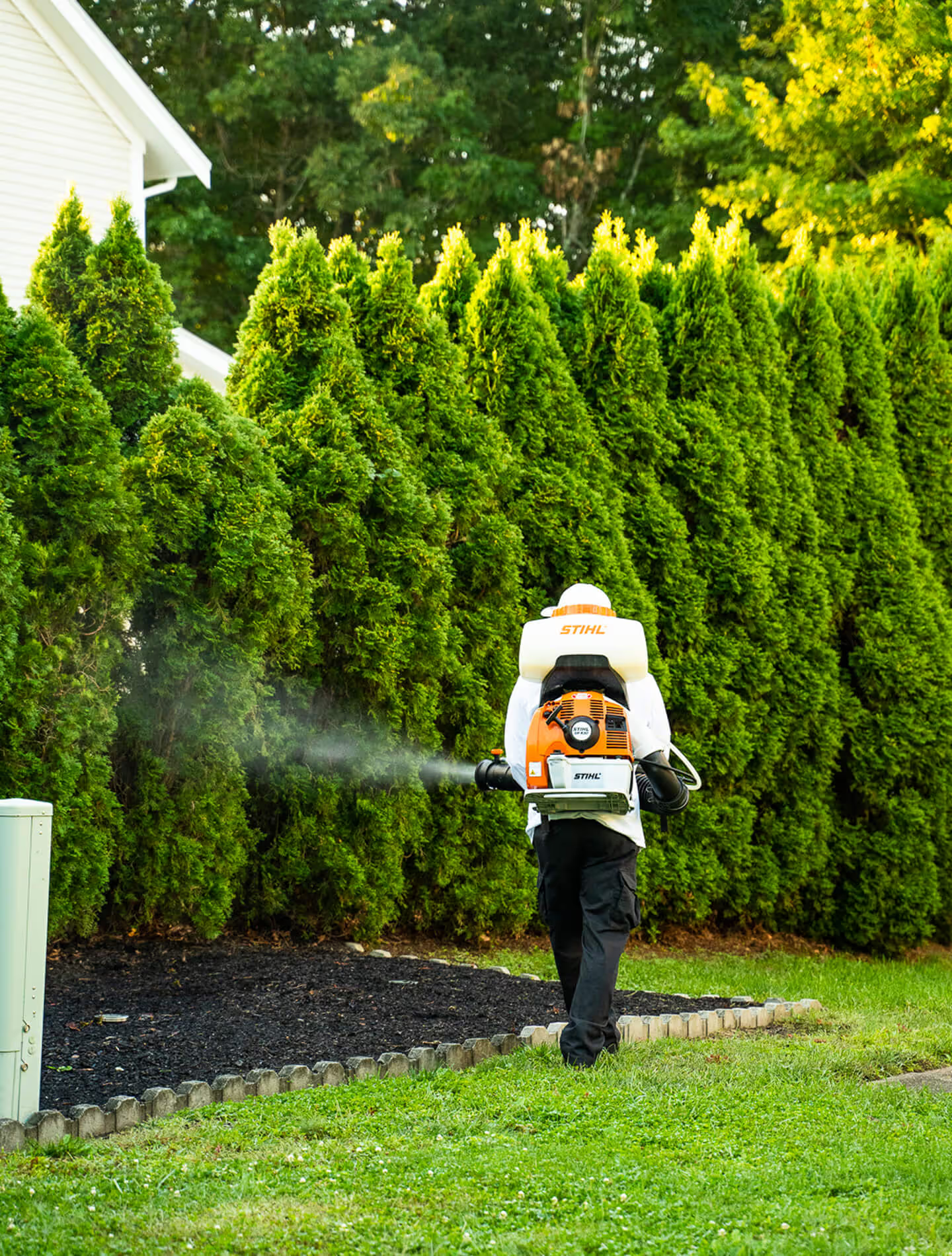
Our winter tick program takes a different approach than seasonal treatment. The goal is twofold: eliminate ticks overwintering on your property and prevent their numbers from exploding when spring arrives.
How Does Our Winter Treatment Process Work?
Our trained technicians:
- Spray the perimeter to create a barrier against migrating ticks.
- Target overwintering areas like leaf litter, mulch beds, and ground cover.
- Treat zones where wildlife and rodent hosts are active.
- Monitor results and make adjustments as needed.
We use products with a long residual life, so treatments begin working immediately and continue to be effective for months after application.
Traditional or All-Natural: Which Should You Choose?
Our traditional treatment uses Bifenthrin, a synthetic version of compounds found in chrysanthemum flowers. We mix it with garlic and a sticking agent that helps it last through rain and sun. This formula is labeled for use in kennels and greenhouses.
For customers who prefer to avoid synthetic solutions, we offer a 100% natural spray using citronella, peppermint, and cinnamon oils, garlic, and a sticking agent. It kills ticks in under 24 hours per the manufacturer's label, and we apply it with the same family- and pet-friendly practices as every treatment. Read how our all-natural program works.
Why Is Year-Round Protection the Best Strategy?
Treating only during the warm months leaves a gap that ticks exploit. Winter tick control bridges that gap and gives you consistent protection across every season. When combined with our regular tick control treatments, you get the most comprehensive tick defense available. Understand your year-round tick exposure risk — and the steps you can take beyond treatment — in our Lyme disease prevention guide.
After treatment, keep kids and pets off treated areas until dry — typically 30–45 minutes. Our products are formulated for outdoor settings and applied using family- and pet-friendly practices.
Why Families Trust Mosquito Mike
Licensed Professionals
We're fully licensed to operate in every state we serve:
Massachusetts Pesticide License: AL-0056510
Rhode Island Pesticide License: 6863
North Carolina Pesticide License: 026-40208
Every Mosquito Mike technician holds a Core Applicator License and completes our comprehensive training program before treating a single yard.
Trained Technicians
Every Mosquito Mike technician holds a Core Applicator License and completes our comprehensive training program before treating a single yard. That includes classroom instruction, virtual reality training, and hands-on field work with experienced techs.
Families served
Treatments Completed
BBB Rating
Award winner
Plans That Fit Your Schedule and Budget
Every plan includes mosquito, tick, and flea protection, plus our satisfaction guarantee. If you see pests between scheduled treatments, we’ll come back and respray at no charge.
Pay As You Go
No contract, no commitment. Pay only when we spray your yard. Bi-weekly service with a minimum of 7 applications.
Prepaid Season Plan
Best value. Pay upfront for the season and first-year clients get their first treatment free. Choose 10, 12 (our most popular), or 14 applications.
Summer Plan
6 treatments from Memorial Day through Labor Day. Perfect for pool owners and summer entertainers.
Annual Protection Plan
Year-round coverage from April through mid-October with easy monthly payments spread over 12 months.
Winter Tick Control Near You
We provide winter tick control services throughout Massachusetts, Rhode Island, and North Carolina.
Massachusetts
Rhode Island
Frequently Asked Questions
Plans That Fit Your Schedule and Budget
Every plan includes mosquito, tick, and flea protection, plus our satisfaction guarantee.
Get Your Instant Quote Now
Tell us a bit about your property and we'll get you an instant quote. No pressure, no obligation.