
Are Ticks Still Out This Winter on the South Shore and Cape Cod?
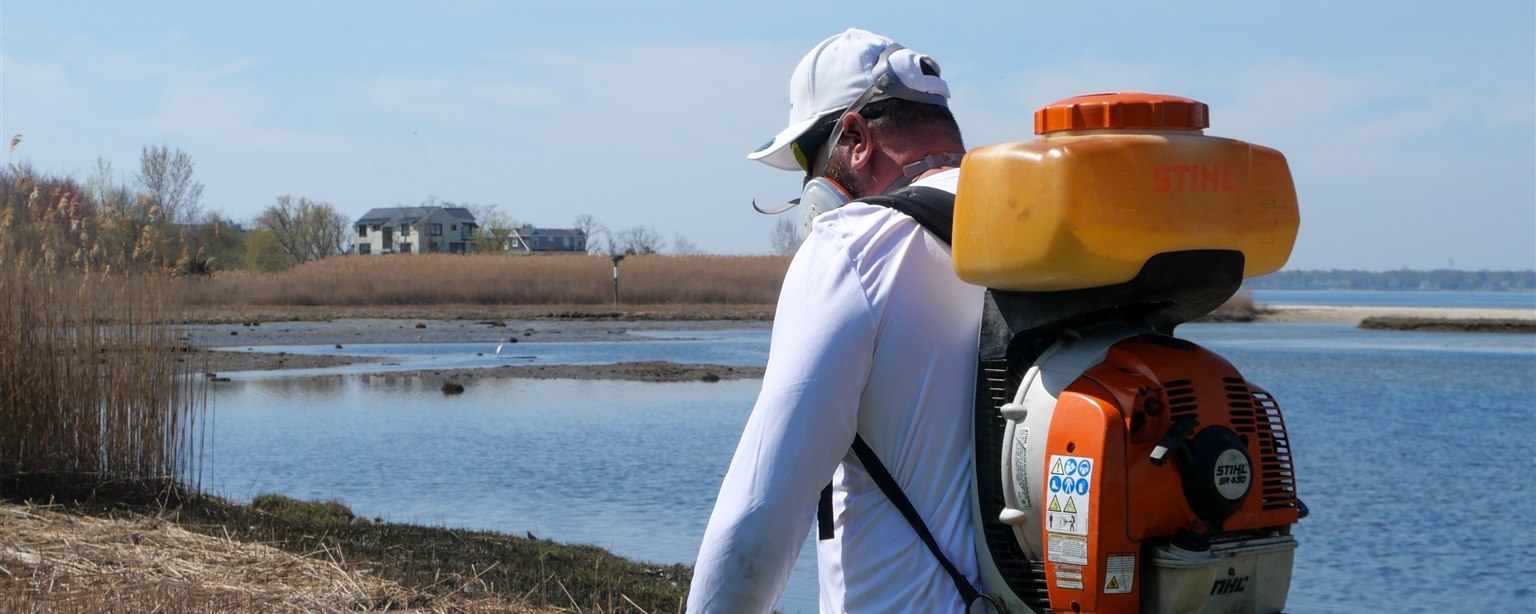
Every year around the first week of December, somebody sends me a photo of a tick. It is usually on a dog, sometimes on a kid’s sock, and the message underneath is always some version of the same question: isn’t it too cold for this? Last winter one came from a customer in Duxbury who had just walked the dog out along the beach road with a hat and gloves on. The tick did not care about the hat and gloves.
I started Mosquito Mike in Fall River in 2017, and the South Shore and the Cape have taught me more about winter ticks than any other part of our territory. This article is about why. It covers which tick is actually out there in the cold months, why the towns along the water get more of it than the towns inland, what the state’s own numbers say about Plymouth and Barnstable counties, and what to look for in eleven towns from Marshfield down to Yarmouth. Then I will tell you what our winter program does and does not do about it.
The Tick People Call the Winter Tick Is Not the One in Your Yard
First, a name problem. There is a real animal called the winter tick. It is the one in the news stories about moose up north. It is a one-host tick: the larvae climb onto a moose in the fall and spend the whole winter on that one animal, sometimes tens of thousands at a time, and the moose can lose so much hair scratching that wildlife biologists call them ghost moose. MassWildlife is plain about what that tick means for people: humans rarely get winter ticks, and they do not carry diseases that spread to humans. The University of Maine’s tick lab says the same thing in almost the same words.
Source: MassWildlife — Winter tick · University of Maine Cooperative Extension Tick Lab — Winter Tick or Moose Tick
So when we talk about winter tick control in Massachusetts, we are not talking about that tick. We are talking about the adult blacklegged tick, the deer tick, the one that carries Lyme disease. Its adults come out in the fall and stay in business straight through to spring. The Massachusetts Department of Public Health puts it simply: adult ticks are most active in fall and spring, but they may be out searching for a host any time temperatures are above freezing. URI’s TickEncounter program, which has people all over the country send in photos of the ticks they find, reports that about 85 percent of what comes in during October and November is adult blacklegged ticks.
Source: Massachusetts Department of Public Health — Lyme disease · University of Rhode Island — Taking a hike? Remember, it’s deer tick season
Cold does not kill them. TickEncounter’s rule for a winter day is two questions: is the ground thawed, and is the air above freezing? Yes to both, and an adult deer tick can be up on a blade of grass waiting for you. The Cape Cod Cooperative Extension said it again this past February, in the middle of a snowy winter: the adult deer ticks are still there beneath the snow, and once the temperature climbs back into the mid-30s to 40 degrees they can become active again. Our winter tick article walks through the weather record behind that, including the January a few years back when our phones rang about ticks all month.
Source: URI TickEncounter — Winter Tick Activity · Cape Cod Cooperative Extension — Will Winter Weather Kill Ticks on Cape Cod?
Why Winter Is Different Near the Water
If a thaw day is a tick day, then the question for your town is how many thaw days it gets. That is where the coast changes the math. Open water holds its heat into the winter, so the shoreline towns run milder than the towns inland and the seasons lag behind. NOAA’s own sailing directions describe the Nantucket area as having cool summers and comparatively mild winters, with a marked lag in the seasons compared to inland areas. The numbers from NOAA’s thirty-year climate normals back that up. The average January temperature at the Hyannis airport is 32 degrees. In Worcester it is under 25. Hyannis sees about 18 days a year when the high never gets above freezing. Worcester sees about 45. Every one of those extra above-freezing days on the coast is a day the ticks can work.
Source: NOAA Coast Pilot 2, Chapter 4 — Nantucket and vicinity · NOAA NCEI — U.S. Climate Normals 1991–2020 (Hyannis, Boston, Worcester stations)
The frost tells the same story. Across our territory the first hard frost usually lands in late October inland and in November near the coast, and a lot of people treat that date as the end of tick season. It is the end of mosquito season. For adult deer ticks it is closer to the start of their busiest stretch. The Cape Cod Cooperative Extension, in its yard advice, even suggests a fall spray in mid-October for exactly that reason: that is when the adult-stage ticks emerge.
Source: Cape Cod Cooperative Extension — Ticks and Bugs
Then there are the deer. Adult blacklegged ticks feed and mate on deer, which is where the nickname comes from, and the eastern part of the state has a lot of them. MassWildlife estimates 12 to 18 deer per square mile across most of central and western Massachusetts, within the state’s goal. In areas of eastern Massachusetts the density can reach over 30 to 50 per square mile, and it runs higher still where hunting access is limited, which describes a good share of the conservation land and the neighborhoods along the South Shore and the Cape. More deer moving through the wood line in November means more adult ticks dropping into the leaf litter at the edge of your yard.
Source: MassWildlife — Deer management
The Numbers Behind the Worry
This is not a theory. The state health department’s newest tick-borne disease report, published in April of this year, ranks the counties by Lyme disease rate for 2025. Barnstable County, which is Cape Cod, had the highest rate in Massachusetts at about 380 cases per 100,000 people. Plymouth County, which covers the South Shore towns in this article, was second at about 290. The statewide rate was about 118. In plain terms, a Cape Cod resident was more than three times as likely to show up in the Lyme count as the average Massachusetts resident, and a Plymouth County resident about two and a half times. Barnstable County also had the highest babesiosis rate on the mainland, behind only the Islands, and the same tick carries anaplasmosis.
Source: Massachusetts Department of Public Health — 2025 Tick-Borne Disease Surveillance Report
Two honest notes on those numbers. Since 2022 the state counts Lyme cases from laboratory results alone, so the figures tell you where the risk is concentrated rather than exactly how many people got sick, and the report itself says children are often diagnosed without a lab test and are less likely to be counted. If anything, the real picture in these towns is heavier than the table shows.
Town by Town: The South Shore
Marshfield
Marshfield’s salt marshes along Green Harbor and the North and South Rivers are what people notice in summer, when the mosquitoes come off them. In winter the risk shifts inland, to the wooded neighborhoods where a substantial local deer population moves through every night. The leaf litter along those lot lines is where the adult ticks wait on a thaw day. Our Marshfield page covers the whole program there.
Duxbury
Island Creek and the Bluefish River drain through Duxbury’s interior to the bay, and the salt marsh along the bay’s western shore runs for miles along the Marshfield line. Duxbury is also a town that walks its dogs on the beach all winter, and a dog that works the dune grass and the marsh edge on a January thaw comes home with whatever was waiting there. See our Duxbury page.
Scituate
Scituate has water on three sides of its story: the North River on the northern border, the Herring River through the interior, and the harbor and the Green Harbor River marsh to the south. The wooded conservation land through the middle of town keeps deer moving all winter, and the trails people use in December run right through that cover. Details on our Scituate page.
Norwell
Norwell is defined by the North River, one of the last undeveloped tidal rivers in Massachusetts, and by the protected floodplain and conservation land along it. That open space is the reason people move here, and it is also a winter deer corridor with miles of leaf-covered edge. Yards that back onto it carry tick pressure long after the first frost. Our Norwell page has the specifics.
Pembroke
Pembroke has the North River along its eastern border and Oldham Pond and the Herring Brook system draining through its wooded interior. Those wetland corridors reach most of the residential neighborhoods, and the brushy edges where a back yard meets the wet woods are classic adult-tick ground from November through March. See our Pembroke page.
Hanover
Hanover’s southern border is the North River, and the Second Herring Brook system and the surrounding conservation land give a suburban town more tick habitat than you would guess from the road. The neighborhoods along that southern edge see the most winter deer traffic. Our Hanover page covers it.
Plymouth
Plymouth is the largest town by land area in Massachusetts, and a big share of it is pine and scrub oak: Myles Standish State Forest covers much of the southwest, with dozens of ponds scattered through the wooded interior and salt marsh along Cape Cod Bay. Pine barrens hold a deep, dry leaf and needle layer that insulates ticks through cold snaps, and the deer have room to roam. Our Plymouth page has the program details.
Town by Town: Cape Cod
Falmouth
Falmouth is one of the Cape’s largest towns, with Buzzards Bay to the west, Vineyard Sound to the south, and a southern shore full of ponds and tidal inlets from Great Pond and Green Pond to Waquoit Bay. The interior is oak and pine woods, and between the mild Sound-side winters and the deer, the ticks there get more working days than almost anywhere in our territory. See our Falmouth page.
Sandwich
Sandwich sits at the top of the Cape where Sandwich Harbor opens onto Cape Cod Bay and the Shawme Pond system runs through the historic center. The freshwater ponds, salt marsh, and the pine and scrub oak forest across town make for a long tick season, and the bay keeps the edge off the cold well into December. Our Sandwich page covers the whole town.
Barnstable
The Great Marshes along Barnstable Harbor form one of the largest salt marsh complexes in New England, Sandy Neck stretches into the bay backed by wetlands, and kettle ponds dot the interior across the town’s seven villages. Barnstable County had the highest Lyme rate in the state in 2025, and this is the county seat. If there is one place in Massachusetts where a winter tick check after a walk should be automatic, it is here. Details on our Barnstable page.
Yarmouth
Yarmouth runs from Cape Cod Bay to Nantucket Sound, with the Bass River along the Dennis line and salt marsh meeting the shore on both coasts. The Bass Hole boardwalk at Gray’s Beach is a winter walk for half the mid-Cape, and the kettle ponds and pine woods through the middle of town keep the deer and the ticks close to the neighborhoods. See our Yarmouth page.
What Winter Tick Control Actually Does Here
Our Winter Tick Defense program runs from November into March, and it is built around the weather I just described rather than around a calendar. Visits are about six weeks apart, up to three through the off-season, and the technician treats the same ground as our in-season tick control: the perimeter and the property, with extra attention to where adult ticks overwinter, which is the leaf litter, the mulch beds, the ground cover, and the wood-line edges the deer travel.
Two rules make it honest. We only treat when a treatment can do some good, so if a stretch is genuinely frozen solid we hold the visit rather than spray the snow and send a bill. And a held visit is never lost. If the winter stays cold enough that a treatment never makes sense, it rolls into your regular season. On the South Shore and the Cape, with the mild days the coast hands out, the winter visits usually happen right on schedule. The goal is fewer ticks waiting in your yard on the day the thaw comes. It will not make the ticks in the conservation land behind your house disappear.
What You Can Do on a Thaw Day
Keep the dog on tick protection all year. The Companion Animal Parasite Council’s guideline is that all dogs should be treated year-round and for life, and it points out that adult blacklegged ticks are most likely to feed on dogs and cats in the cooler months, which is exactly when seasonal-only protection tends to lapse. Check the dog after a beach or trail walk on any mild day: ears, collar line, armpits, between the toes.
Source: Companion Animal Parasite Council — Ticks · Companion Animal Parasite Council — Ixodes scapularis
Check yourself, too, and do it the same day. The CDC says that in most cases a tick must be attached for more than 24 hours before the Lyme disease bacterium can be transmitted, and that adult ticks are big enough that people usually notice and remove them before that. A full-body check after a winter walk and ten minutes in a dryer on high heat for the clothes you wore takes care of most of the risk. If you find one attached, our Lyme disease prevention guide covers removal and what to watch for afterward.
Source: CDC — How Lyme Disease Spreads · CDC — Preventing Tick Bites
And finish the fall cleanup. Leaves raked off the beds along the foundation and the edge of the lawn, brush cut back where the yard meets the woods, the woodpile up off the ground and away from the house. That is the same Saturday of work that keeps the mice out this fall, and the mice and the ticks share the same leaf litter. One cleanup, two problems.
Winter on the South Shore and the Cape is a gift most of the year. The water keeps the worst of the cold away and the walks are better for it. The ticks just happen to agree. Treat the mild days as tick days and you will be fine.
Related Reading
- Winter Tick Control: Why One Warm Day Brings Ticks Back Out — the weather record and how the winter program works.
- Tick Season in Massachusetts: When Ticks Are Active and How to Protect Your Yard — the full year, month by month.
- Lyme Disease Prevention: A Homeowner’s Guide — removal, symptoms, and the yard plan.
If the ground is thawed and the air is above freezing, the adult deer ticks on the South Shore and Cape Cod are working. Check the dog, check yourself, and keep the leaf litter off the edge of the yard.
Mosquito Mike provides tick control and Winter Tick Defense across Massachusetts, Rhode Island, and the Raleigh Triangle, with traditional and all-natural programs and complimentary resprays as part of the service guarantee. Get your instant quote.
Frequently Asked Questions
Are ticks active in winter on the South Shore and Cape Cod?
Yes. Adult blacklegged (deer) ticks are most active in fall and spring, and the Massachusetts Department of Public Health notes they may be out looking for a host any time temperatures are above freezing. The coast runs milder than inland Massachusetts, so the South Shore and Cape Cod get more of those days each winter than towns farther from the water.
Which tick species are active in winter in Massachusetts?
The adult blacklegged tick, also called the deer tick, is the one that matters for people in winter. It carries Lyme disease, anaplasmosis, and babesiosis. Dog ticks and lone star ticks are warm-season ticks here, and the animal actually named the winter tick is a moose parasite that rarely bites people and carries no human disease.
Is the winter tick the same as the deer tick?
No. The winter tick is a one-host tick that spends its whole life on a single moose, deer, or horse. MassWildlife says humans rarely get winter ticks and they do not carry diseases that spread to humans. When Massachusetts homeowners talk about winter tick problems, they are almost always describing adult deer ticks, which are a different species.
Do ticks die when it snows on Cape Cod?
No. Freezing temperatures do not kill adult deer ticks. They wait under the snow and the leaf litter, and the Cape Cod Cooperative Extension reports they can become active again once temperatures climb back into the mid-30s to 40 degrees, even in the middle of winter. Snow cover pauses them; a thaw lets them back out.
When is the best time to treat for ticks in the fall?
Adult deer ticks emerge in October, which is why the Cape Cod Cooperative Extension suggests considering a fall treatment in mid-October. Our Winter Tick Defense program picks up from there, with visits about six weeks apart from November into March, timed around the weather rather than the calendar.
Is winter tick treatment worth it in Massachusetts?
On the South Shore and Cape Cod, where winters are milder and adult ticks get more working days, we think so, and Barnstable and Plymouth counties had the two highest Lyme disease rates in the state in 2025. Our winter visits are weather-gated: if conditions are too cold for a treatment to help, we hold the visit, and any held visit rolls into your regular season.
How long does a tick have to be attached to spread Lyme disease?
The CDC says that in most cases a tick must be attached for more than 24 hours before the Lyme disease bacterium can be transmitted. Adult ticks are large enough that people usually notice and remove them before then, which is why a same-day tick check after a winter walk matters so much.
Which Massachusetts towns have the most Lyme disease?
The state reports by county. In the 2025 report, Barnstable County (Cape Cod) had the highest Lyme disease rate in Massachusetts at about 380 cases per 100,000 people, and Plymouth County was second at about 290, against a statewide rate of about 118. Those counts come from lab results alone, so they show where the risk is concentrated rather than the full number of people affected.
Ready to take your yard back?
Get an instant quote for your property in about a minute.
Get Your Free QuoteOr call (844) 750-6453

Ready to take your yard back?
Get an instant quote for your property in about a minute.
