
Where Do Mosquitoes Go in Winter? A New England and Raleigh Homeowner’s Guide
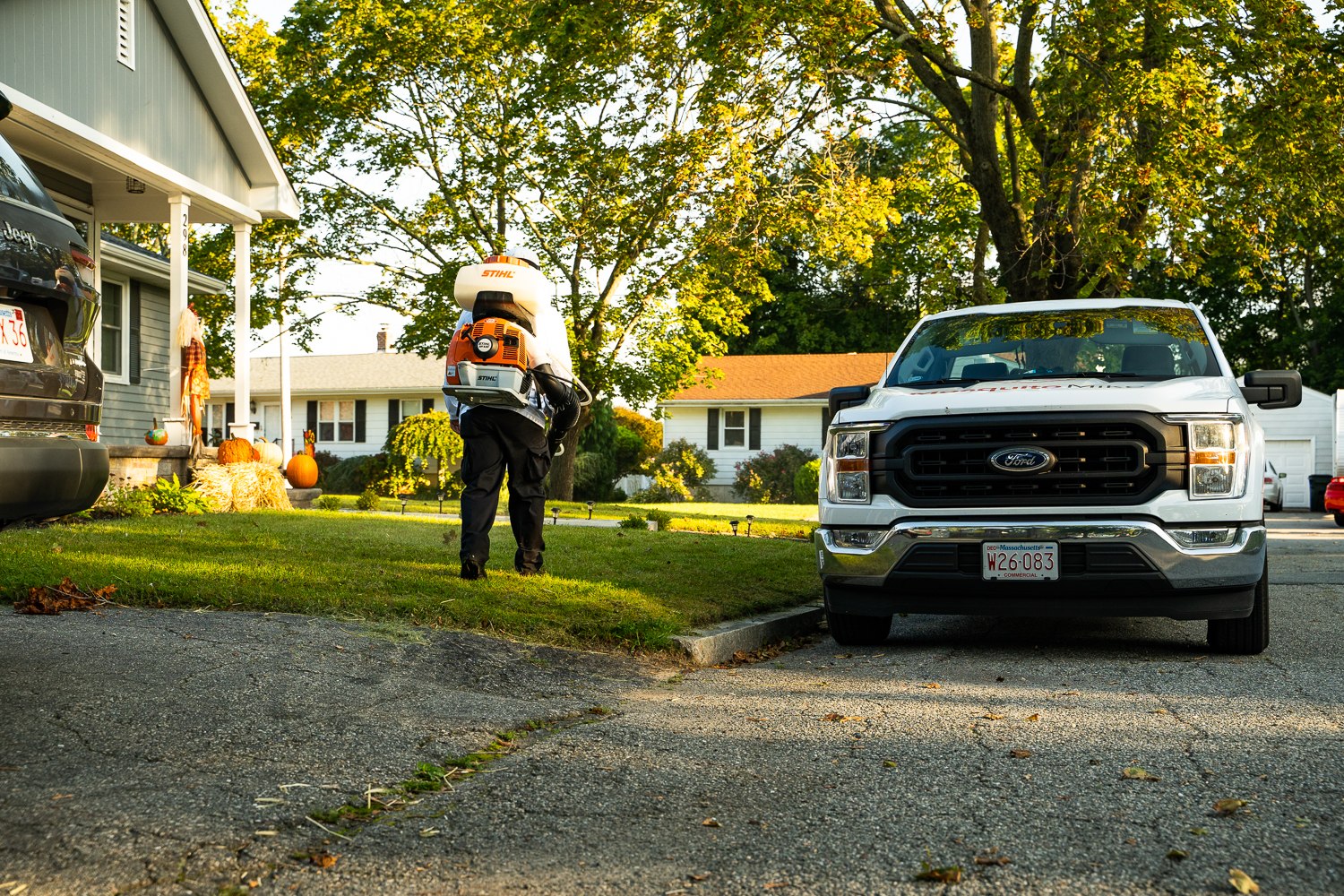
Every fall, the familiar hum of mosquitoes fades, and homeowners across Massachusetts, Rhode Island, and the Raleigh Triangle breathe a collective sigh of relief. But where do mosquitoes actually go in winter? Do they die off completely, or are they quietly waiting somewhere on your property? The answer depends on the species, your local climate, and a fascinating biological process called diapause. Understanding what mosquitoes do between October and April gives you a real advantage — because the decisions you make in fall and early spring directly shape how bad your mosquito season will be.
Do Mosquitoes Die in Winter or Just Disappear?
Most mosquitoes do not die in winter — they disappear strategically. Depending on the species, adult female mosquitoes may enter a state of dormancy called diapause, hibernate in sheltered spots such as storm drains or crawl spaces, and others leave behind fertilized eggs that can survive freezing temperatures and hatch the following spring. Male mosquitoes do die off as temperatures drop — they rarely survive the first frost — but their role ends after mating anyway. The females are the survivors, and they have evolved remarkably effective strategies for making it through even a harsh New England winter. So when you stop seeing mosquitoes, they haven’t gone far.
How Mosquitoes Survive Cold Weather: Diapause Explained
Diapause is the mosquito equivalent of hibernation, but it is more precisely a hormonally triggered state of suspended development — not simply a response to feeling cold. As days shorten in late summer and early fall, decreasing daylight hours signal certain mosquito species to begin preparing for winter before temperatures actually drop. Metabolic rate slows dramatically, fat reserves accumulate, and reproductive activity halts.
For adult female mosquitoes that overwinter in diapause, the key trigger is photoperiod — the ratio of daylight to darkness — rather than temperature alone. This is why populations begin to decline in September in Massachusetts even during warm autumns. Once a female enters diapause, she can survive for months in a sheltered microhabitat: a basement, a storm drain, a dense stand of leaf litter, or a hollow tree. When spring daylength signals return, she emerges, seeks a blood meal, and begins reproducing — often before most homeowners realize the season has started.
Source: Effect of Overwintering on the West Nile Virus Vector Culex pipiens
Not every mosquito species uses adult diapause. Some overwinter exclusively as eggs, and those eggs can sit dormant in dried-up water sources through an entire New England winter, hatching in spring when water and warmth return simultaneously.
Source: Armbruster — Photoperiodic Diapause and the Establishment of Aedes albopictus in North America
Species Breakdown: How Culex, Aedes, and Anopheles Overwinter Differently
Understanding which mosquito species is in your yard matters because each genus has a different winter survival strategy.
Culex Mosquitoes: The Storm Drain Hibernators
Culex pipiens — the northern house mosquito and the primary vector of West Nile virus in Massachusetts and Rhode Island — overwinters as mated adult females. As days shorten in September and October, female Culex mosquitoes seek sheltered, temperature-stable environments: storm drain systems, basement window wells, root cellars, crawl spaces, and underground utility voids. In densely populated urban and suburban areas of eastern Massachusetts, storm drain networks function as an extensive overwintering refuge, allowing large populations to survive in close proximity to human neighborhoods.
Source: West Nile Virus in Overwintering Culex Mosquitoes, New York City — Emerging Infectious Diseases
Once spring arrives and temperatures consistently reach the low 50s Fahrenheit, these females emerge, blood-feed, and begin laying eggs — typically in clusters of 100 to 400 eggs called rafts, deposited on stagnant or slow-moving water. Because they have already mated the previous fall, they can begin reproduction immediately without waiting to find a mate.
In North Carolina’s Raleigh Triangle, Culex quinquefasciatus (the southern house mosquito) is the dominant Culex species. It follows a similar pattern but with a shorter, less deep diapause due to milder winters — meaning emergence can begin weeks earlier than its northern cousin.
Aedes Mosquitoes: The Egg Overwintering Specialists
Aedes albopictus (Asian tiger mosquito) and Aedes japonicus are common in both New England and the Raleigh Triangle. These species do not overwinter as adults. Instead, mated females lay desiccation-resistant eggs in late summer and fall, and those eggs enter diapause at the egg stage. The eggs can survive complete drying and freezing — a capability that makes them extraordinarily resilient and difficult to eliminate by habitat modification alone.
The eggs are typically deposited at the waterline of small containers: old tires, buckets, clogged gutters, tarps, birdbaths, and any object that holds even a small amount of water. In Massachusetts and Rhode Island, these eggs routinely survive the winter in overturned containers or leaf-filled gutters and hatch as soon as spring water temperatures and day length align — often in late April or early May.
Source: Armbruster — Photoperiodic Diapause and the Establishment of Aedes albopictus in North America
Aedes aegypti, the yellow fever mosquito, is not established in New England but does have a limited presence in some warmer southern areas. It is not a significant factor for Raleigh Triangle homeowners at current population levels.
Anopheles Mosquitoes: The Low-Profile Overwinterers
Anopheles mosquitoes — the genus associated with malaria transmission globally — are present in both New England and the Carolinas, though malaria is not a significant domestic public health concern in these regions. Anopheles species in the northeastern United States primarily overwinter as adult females in diapause, sheltering in similar environments to Culex: basements, caves, animal burrows, and dense brush. They are generally less abundant in suburban environments than Culex or Aedes species and are not the primary concern for most residential property owners.
What Temperature Actually Kills Mosquitoes?
The precise temperature threshold that kills mosquitoes depends on species, life stage, and exposure duration, but general benchmarks are well established by entomological research.
- Adult mosquitoes become inactive when air temperatures fall below approximately 50°F (10°C). At this temperature, flight and feeding cease, and diapause-capable species begin seeking shelter.
- Adult mosquitoes that do not enter diapause — primarily males and non-overwintering females — die when temperatures drop to or below freezing (32°F / 0°C) for sustained periods.
- Eggs of Aedes species are highly freeze-tolerant and can survive temperatures as low as 14°F (-10°C) or lower when protected by damp leaf litter or soil. A single night of hard frost does not kill them.
- Larvae and pupae cannot survive freezing. Any standing water that freezes solid will kill immature mosquitoes in it — but only if all the water freezes.
Source: Iowa State University Extension and Outreach — Cold Hardiness of Insects
Source: Thomas et al. — Low-temperature Threshold for Egg Survival of Aedes albopictus
For Massachusetts and Rhode Island homeowners, the first meaningful frost — typically mid-October in inland areas like Worcester County and Middlesex County, and late October to mid-November along the coast and in greater Providence — marks the point at which most adult activity ceases. However, warm spells in October and early November can temporarily reactivate overwintered females in unusually mild years.
In the Raleigh Triangle, where average winter low temperatures run from the mid-30s to the low 40s°F through December and January, sustained killing frosts are less frequent. This means mosquito activity may simply pause for weeks at a time rather than stopping for months — a meaningful distinction for homeowners in Cary, Durham, Wake Forest, and surrounding communities.
The practical consequence for a treatment schedule is that the calendar is a poor guide to the end of the season. The first cool week is not the finish line: adult females are still flying, and the ones flying in October are the ones that overwinter. A late-season application is timed against that population rather than against a date.
When Do Mosquitoes Come Back in Spring in Massachusetts and Rhode Island?
Spring mosquito emergence in Massachusetts and Rhode Island is governed by two variables working in concert: day length and soil or water temperature. The general rule is that sustained air temperatures above 50°F trigger feeding activity in overwintered Culex females, while Aedes eggs begin hatching once water temperatures in small containers consistently reach the mid-50s°F.
Average last frost dates give a useful frame:
- Inland Massachusetts (including communities like Worcester, Framingham, and Lowell): average last frost in late April, with first notable mosquito activity typically emerging in early to mid-May.
- Coastal Massachusetts and greater Boston: average last frost in mid-to-late April; mosquito activity often begins in late April or early May in sheltered, south-facing yards.
- Rhode Island (inland communities like Coventry and Foster): average last frost in mid-April; mosquito activity begins in late April in most years.
- Coastal Rhode Island (Providence metro, South County, Newport): average last frost in early to mid-April; emergence can begin by mid-April in warm springs.
Urban and suburban neighborhoods are the part of this most homeowners underestimate. After the 1999 West Nile virus outbreak in New York City, researchers sampled overwintering mosquitoes and recovered Culex from underground and structural refuges — utility equipment rooms, hillside structures and heavy masonry buildings — and concluded that the survival of overwintering females is how the virus carries through a northeastern winter. Dense eastern Massachusetts neighborhoods offer the same kind of sheltered, temperature-stable space, which means emergence can begin before the last frost date has even passed in some sheltered urban microhabitats.
Source: West Nile Virus in Overwintering Culex Mosquitoes, New York City — Emerging Infectious Diseases
The practical takeaway: in most of Massachusetts and Rhode Island, mosquito season begins between late April and mid-May, with populations building rapidly through June. Homeowners who want to be ahead of that build book their first treatment for mid-April, so the barrier is already in place when the first wave emerges.
When Do Mosquitoes Return in Raleigh, NC? (A Different Timeline)
The Raleigh Triangle operates on a substantially different mosquito calendar than New England. Average winter low temperatures in the region — including communities like Apex, Cary, Clayton, Durham, Fuquay-Varina, Garner, Holly Springs, Morrisville, Raleigh, Wake Forest, Wendell, and Zebulon — typically bottom out in the mid-30s to low 40s°F in January and February. This is cold enough to suppress most adult mosquito activity, but not cold enough to kill overwintering females reliably or to prevent periodic winter activity on warm days.
In the Triangle, the practical pattern looks like this:
- Culex quinquefasciatus populations can begin limited activity during warm spells (days reaching 60°F or above) even in January and February in the Triangle.
- Aedes albopictus eggs begin hatching reliably once water temperatures in containers reach the mid-50s°F, which in Raleigh-area microclimates often occurs in March — sometimes as early as late February following a mild winter.
- By April, mosquito populations in the Triangle are building actively, and by mid-May they can reach peak nuisance levels that rival the height of the New England season.
For Raleigh Triangle homeowners, the mosquito season effectively runs from late March through early November in an average year — roughly six to eight weeks longer than a typical Massachusetts season. Starting treatment in late March or early April is strongly advisable to stay ahead of the early-season surge.
Six to eight extra weeks is a different service year, not a shifted one. A Triangle program opens in late March and is still running in October, which is why a schedule copied from a Massachusetts property starts late at one end and stops early at the other.
New England vs. Carolinas: How Winter Mosquito Behavior Differs by Region
The contrast between mosquito winter biology in Massachusetts and Rhode Island versus the Raleigh Triangle is stark and practically important for homeowners.
| Factor | Massachusetts / Rhode Island | Raleigh Triangle, NC |
|---|---|---|
| Average winter low (Jan) | Low-to-mid 20s°F | Mid-30s to low 40s°F |
| Adult diapause depth | Deep; females inactive Nov–Apr | Shallow; activity possible on warm days |
| Dominant overwintering Culex | Culex pipiens (northern house mosquito) | Culex quinquefasciatus (southern house mosquito) |
| Aedes egg hatch window | Late April–early May | Late February–March |
| Effective mosquito season length | ~5–6 months (May–October) | ~7–8 months (late March–November) |
| Key overwintering microhabitats | Storm drains, basements, dense brush | Leaf litter, containers, sheltered structures |
| Winter mosquito bites possible? | Extremely rare; hard frosts end adult activity | Possible during warm spells (60°F+ days) |
One area where both regions share equal concern: overwintering ticks. Mosquitoes wind down with the cold, but blacklegged ticks (deer ticks) do not. The Massachusetts Department of Public Health puts peak tick risk in spring, summer, and fall — and notes that adults can still be out searching for a host any time winter temperatures are above freezing. Ticks sitting on frozen ground stay put; a thaw is what wakes them. Late fall, winter, and early spring all carry real tick exposure even as mosquito pressure fades, and a winter tick control program covers the months when mosquito treatment is not running.
Source: Massachusetts Department of Public Health — Tick-borne Disease Prevention
Source: URI TickEncounter Resource Center — Winter Tick Activity
Fall Homeowner Action Checklist: Reduce Next Spring’s Mosquito Population
What you do between September and November directly determines how fast populations build the following spring. Each of these steps eliminates overwintering habitat or disrupts the egg and diapause cycle before it completes.
Eliminate Standing Water and Container Breeding Sites
- Turn over or store any container that holds water: buckets, toys, plant saucers, wheelbarrows, recycling bins, and pet water bowls.
- Drain and store birdbaths for the winter or change the water weekly through October if you keep them in use.
- Inspect old tires, tarps, and any covered outdoor furniture where water can collect in folds.
Manage Your Gutters
- Clean gutters in mid-to-late October after leaf fall is complete in your area. Clogged gutters hold standing water and moist leaf debris — prime Aedes egg-laying substrate.
- Consider gutter guards if cleaning is difficult; clogged gutters are one of the most overlooked Aedes breeding sites in suburban New England and North Carolina.
Address Yard Drainage
- Low spots in your yard that hold water after rain are potential larval habitat in spring. Fall is the best time to grade or add drainage before the ground freezes in New England.
- In the Raleigh Triangle, where ground doesn’t freeze deeply, drainage improvements can be made through the winter.
Eliminate Dense Overwintering Harborage
- Culex females seek sheltered spots with stable cool temperatures. Brush piles, dense ornamental shrubs along the foundation, and stacked firewood against the house all provide overwintering shelter.
- Remove wood piles from the immediate house perimeter and thin foundation plantings.
Schedule a Mosquito Spray Service Before the Season Ends
- A fall mosquito spray service applied in September or October knocks down the adult mosquitoes still active on your property heading into winter. Pair it with the habitat steps above — the gutters and containers are where next spring’s freeze-tolerant Aedes eggs are already waiting, and clearing them is the step with the largest effect on early-season pressure.
Inspect Basement and Crawl Space Entry Points
- In Massachusetts and Rhode Island especially, seal gaps around basement window frames, dryer vents, and foundation cracks where Culex females can enter and overwinter in climate-controlled spaces.
Ready to protect your yard before mosquito season returns?
Mosquito Mike serves homeowners across Massachusetts, Rhode Island, and the Raleigh Triangle — including Apex, Cary, Durham, Raleigh, Wake Forest, and surrounding communities. Get a free quote today.
When to Schedule Your First Professional Mosquito Treatment of the Season
Timing your first professional mosquito control treatments is one of the most consequential decisions of the mosquito season. Treating too late means you’ve already allowed overwintered females to produce one or two full reproductive cycles — potentially thousands of new adults — before you intervene.
Massachusetts and Rhode Island: Target Window
For most of MA and RI, the first treatment should be scheduled for mid-April — just ahead of the late-April wake-up, so the season’s first wave emerges into a treated yard. In coastal areas — South Shore MA, Cape Ann, greater Providence, Newport — where emergence is earliest, aim for early-to-mid April if the spring has been warm. In inland communities (Worcester, Lowell, and the MetroWest suburbs), where mosquitoes come out a week or two later, a first treatment by the end of April still puts you ahead of them. The goal is to apply a barrier treatment before the first significant hatching event of the season rather than after it.
Raleigh Triangle: Target Window
For communities in Wake, Durham, and Johnston Counties — including Cary, Apex, Holly Springs, Fuquay-Varina, Morrisville, Garner, Clayton, Wendell, Zebulon, Wake Forest, and Raleigh itself — the first treatment window opens in late March to early April. By the time azaleas are blooming in the Triangle, mosquitoes are already active. Waiting until May leaves six or more weeks of early-season breeding unaddressed.
Signs It’s Time to Schedule:
- Daytime temperatures are starting to hold in the 50s°F
- You haven’t seen a mosquito yet — the best time to book is before the first one shows up
- Trees are leafing out and providing the shaded resting cover mosquitoes require
A professional mosquito control program from Mosquito Mike uses targeted barrier treatments on the foliage, shrubs, lawn, and shaded resting areas across the property where adult mosquitoes spend most of their time. Barrier treatments coat the leaf surface — they do not move into the plant — so new growth after a visit is untreated. A shorter cycle keeps up with it. Our primary plans run bi-weekly, about every 14 days, so we’re on your property twice a month for your most consistent experience. Tri-weekly and seasonal plans cover the same ground on a longer cycle. Contact Mosquito Mike whenever you’re ready to plan your first treatment of the season.
Source: Oregon State University Extension — Pesticide Redistribution and Pesticide Efficacy (PNW 772)
Frequently Asked Questions
Do mosquitoes die in winter or just hide?
Most species hide rather than die. Female mosquitoes of certain species, particularly Culex pipiens in New England, enter diapause and shelter in protected locations like storm drains, basements, and brush piles. Aedes species leave behind freeze-resistant eggs that survive winter and hatch in spring. Only male mosquitoes and non-diapause-capable females die reliably at first frost.
What temperature kills mosquitoes?
Adult mosquito activity ceases below about 50°F (10°C). Non-diapause adults die when temperatures drop to or below 32°F (0°C) for sustained periods. Aedes eggs are freeze-tolerant and can survive down to approximately 14°F (-10°C) or below when insulated by moist leaf litter or soil. Larvae and pupae in standing water die if that water freezes solid.
When do mosquitoes come back in spring in Massachusetts?
In most of Massachusetts, mosquito activity resumes between late April and mid-May, depending on location. Coastal areas near Boston and the South Shore see the earliest emergence; inland communities west and north of Boston typically follow two to four weeks later. Warm springs can push emergence earlier across all regions, and overwintering Culex pipiens sheltering in urban structures can emerge before the last frost date has even passed.
When do mosquitoes come back in Raleigh, NC?
In the Raleigh Triangle, including Cary, Apex, Durham, Wake Forest, Holly Springs, Morrisville, and surrounding towns, Aedes eggs typically begin hatching in late February or March following mild winters, and population activity builds substantially by April. The effective mosquito season in the Triangle runs from late March through early November in most years, roughly six to eight weeks longer than a typical Massachusetts season.
Should I treat my yard in fall to prevent spring mosquitoes?
A fall barrier treatment reduces the adult mosquitoes still active on your property late in the season. The larger lever for next spring is habitat: cleaning gutters, emptying containers, and improving drainage before winter removes the places where freeze-tolerant Aedes eggs are already waiting to hatch. Doing both is what lowers early-season pressure the most.
Can mosquitoes survive indoors during winter?
Yes, particularly Culex pipiens. Mated female Culex mosquitoes will enter basements, utility rooms, and crawl spaces through gaps in window frames, foundation vents, and siding. In climate-moderated indoor spaces they enter a lighter diapause and can remain alive through winter, sometimes biting residents on unusually warm days. Sealing foundation entry points in fall is an important preventive step, especially in Massachusetts and Rhode Island homes.
What is diapause in mosquitoes?
Diapause is a hormonally regulated state of suspended development that allows mosquitoes to survive unfavorable conditions such as winter cold. Unlike simple cold-induced stupor, it is triggered by shortening day length in late summer, before temperatures drop significantly, and involves physiological preparation: reduced metabolic rate, fat accumulation, and the complete cessation of reproductive activity. It ends when spring day length and temperature signals reach the appropriate thresholds.
Do mosquito eggs survive winter in New England?
Yes. Aedes albopictus and related species lay desiccation-resistant and freeze-resistant eggs in late summer and fall that routinely survive New England winters. These eggs tolerate freezing when insulated by moist leaf litter or soil, and they require only water and warmth to hatch in spring. Eliminating container water sources such as gutters, buckets, tarps, and old tires before winter is one of the most effective steps homeowners can take to reduce the following season mosquito population.
Ready to take your yard back?
Get an instant quote for your property in about a minute.
Get Your Free QuoteOr call (844) 750-6453

Ready to take your yard back?
Get an instant quote for your property in about a minute.